Weight Distribution Basics: Why Your Crawler Tips Over (and How to Fix It)
If your micro crawler keeps tipping on off-camber terrain or spinning tires on climbs, weight placement is usually the problem. Here's how to think about it.
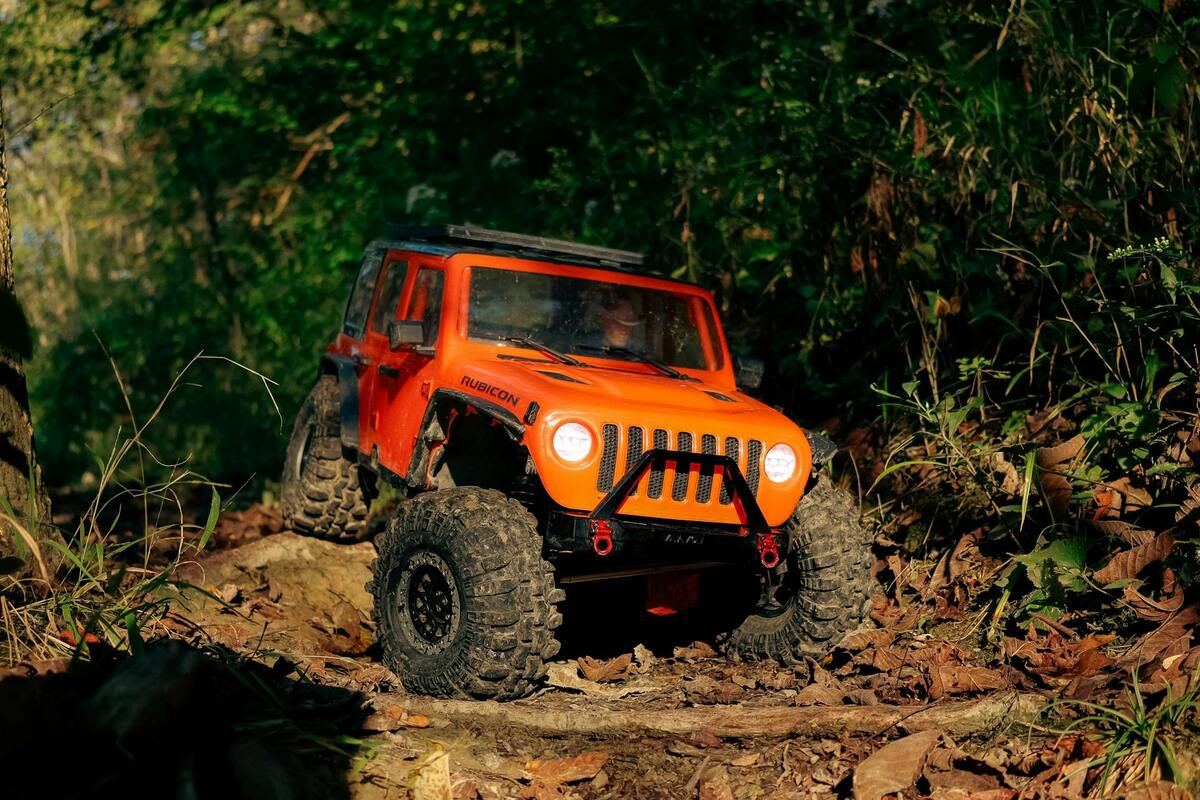
I spent my first month back in RC confused about why my SCX24 kept tipping over. I added new tires. I lowered the ride height. I tried softer foam inserts. The truck still rolled onto its side every time I put it on anything with a sideways slope.
The problem was not the tires. It was not the suspension. The problem was that I had a 95-gram truck with its weight distributed wrong for the terrain I was running.
Understanding weight distribution is one of those things that experienced crawlers take for granted but almost nobody explains to beginners. Once you understand it, a lot of other advice about brass upgrades and ballast placement starts making sense.
What “Center of Gravity” Actually Means on a Crawler
Your crawler’s center of gravity is the point where its weight is effectively balanced. Think of it as the truck’s tipping point.
A high center of gravity means the truck tips easily. A low center of gravity means it can lean further before it falls. On off-camber terrain (sections where the ground slopes sideways under you), a truck with a high center of gravity will roll onto its side before the suspension runs out of travel. A truck with a low center of gravity will stay planted.
Stock micro crawlers are light. The SCX24 out of the box weighs roughly 95-100 grams. Most of that weight is the battery, the electronics, and the motors. All of those sit fairly high in the chassis relative to the axles. This is fine for flat terrain. On anything with a serious side slope, it becomes a problem.
The fix is not magic. You move weight lower in the chassis, and the truck becomes harder to tip.
Front vs. Rear: Traction and Climb Angle
Weight distribution along the length of the truck matters as much as height.
On a steep uphill climb, more weight over the rear wheels means less weight over the front wheels. Less weight on the front wheels means less traction at the front. The front end gets light, the tires spin, and the truck either stalls on the climb or pivots sideways.
More weight toward the front of the truck keeps the front tires loaded on steep climbs. This improves front-wheel traction and helps the truck track straight uphill instead of wanting to swing around.
On steep downhill sections, the opposite applies. Weight shifts forward naturally as the nose drops. This is usually fine, but if you’ve added a lot of front weight and the nose digs in hard on descents, the rear can get light and skip sideways.
For most beginner trail use, biasing slightly toward the front produces better results more often than a rear-heavy setup. You will spend more time trying to drive up things than trying to control descents.
The Off-Camber Problem
Off-camber terrain is where weight placement is most obvious. This is any section where the ground tilts sideways relative to your direction of travel.
When the truck is on an off-camber slope, gravity is trying to pull it downhill. The suspension on the high side is extended, the suspension on the low side is compressed, and the truck is leaning. The question is whether the center of gravity stays over the footprint of the tires before the truck tips.
A truck with a high, narrow center of gravity will tip early. A truck with a low center of gravity will lean a lot before tipping, giving the suspension room to work.
The fastest way to improve off-camber stability on the SCX24 is to lower mass into the chassis. Brass axle weights mount directly onto the axle housings, which are the lowest point on the truck. Moving weight to the lowest possible location drops the center of gravity more effectively than adding the same weight anywhere else.
Where to Add Weight on the SCX24
The SCX24 has a well-developed aftermarket for brass weights specifically because it benefits so much from them.
Axle weights are the highest-value first purchase. They mount to the front and rear axle housings, which are the lowest components on the truck. A modest front and rear axle brass set typically adds 20-30 grams and meaningfully lowers the center of gravity. Both off-camber stability and traction improve noticeably. The SCX24 brass upgrade guide goes deeper on specific parts and installation.
Front bumper weights add mass at the front and low. These help front-end traction on climbs and bring the nose down on steep approaches. Most SCX24 brass bumpers bolt on in place of the plastic stock bumper.
Rear skid weights add mass at the rear and low, which helps off-camber stability at the back of the truck. If you are running a lot of rear brass, watch for front-end lightness on steep climbs.
Battery position is free to adjust on many SCX24 builds. Some chassis configurations allow moving the battery forward or rearward by an inch or so. Moving the battery forward adds front traction on climbs without spending anything.
Where to Add Weight on the TRX4M
The TRX4M is heavier than the SCX24 stock, at roughly 350 grams. Its center of gravity situation is different. It is more naturally stable on off-camber terrain out of the box.
The TRX4M’s stock weight is also more evenly distributed because its battery sits lengthwise in the chassis at a relatively low position. The truck tips, but it is less immediate than the SCX24.
For the TRX4M, front-biased weight is still the move for improving climb performance. Brass front axle weights or a brass front bumper are the common upgrades. Portal gear covers can also be swapped for brass versions, which adds weight at the axle level where it helps most.
The TRX4M’s aftermarket for brass is smaller than the SCX24’s. Some SCX24 brass parts do not transfer over. Check part dimensions carefully before ordering, or look for TRX4M-specific listings.
How Much Weight Is Too Much?
This is a legitimate question and the honest answer is: it depends on how you’re driving.
For casual trail use on flat to moderately technical terrain, adding 30-60 grams of brass to an SCX24 makes a real improvement without punishing anything. The stock brushed motor handles the extra load at crawling speeds.
At some point, more weight stops helping and starts hurting. A very heavy SCX24 is slower to respond, harder on the motor on prolonged technical sections, and starts putting real stress on the plastic drivetrain under sudden load changes. Competitive crawling events often cap brass weight for this reason.
A practical ceiling for casual trail use on a stock-drivetrain SCX24: around 150-170 grams total. That usually means a modest front and rear axle brass set plus a bumper weight. You will notice the improvement. You will not notice extra strain on the drivetrain.
If you go significantly heavier, consider whether a brushless motor upgrade makes sense at the same time. A heavier truck with a brushless motor is a reasonable combination. A very heavy truck on a well-worn brushed motor will start having thermal issues on long sessions.
What to Buy
If you want to improve off-camber stability and climbing traction on your SCX24, here’s where to start:
- Brass axle weights (front and rear): The Injora SCX24 brass kit includes knuckles, diff covers, and portal covers: the pieces that sit lowest on the truck and do the most work for stability. It is the most impactful single purchase for improving off-camber behavior.
- Brass front bumper: A bolt-on replacement for the plastic stock bumper. Adds front weight low and forward. Search for “SCX24 brass front bumper” for current options.
- For the TRX4M: Injora TRX4M brass portal covers and axle housing are the equivalent starting point. Same logic: lower CG and better stability on off-camber terrain.
You do not need to buy everything at once. Start with front axle brass, run it for a session, and notice what changed. Then decide if you need more.
The Simple Version
If your crawler tips on off-camber terrain: lower the center of gravity by adding brass weights as low in the chassis as possible, starting with the axles.
If your crawler loses front traction on climbs: add weight toward the front of the truck, either with a brass bumper or by moving the battery forward if your chassis allows it.
If your crawler is doing fine and none of this is bothering you: leave it alone. Weight is a tool for a specific problem, not a default modification everyone needs.
Once you’ve sorted the weight question, suspension tuning is the next logical step. The stock shocks on both platforms need adjustment once you add brass, and the suspension tuning guide covers exactly how to do that without buying anything new.
See also: SCX24 Brass Upgrade Guide · Shock and Suspension Tuning · Throttle Control Basics · Tire Guide by Terrain · Crawler Tire Foams · First 5 Upgrades · Best SCX24 Upgrades Under $50 · Why Your SCX24 Keeps Tipping Over
This page contains affiliate links. If you purchase through these links, I may earn a small commission at no additional cost to you. I only recommend gear I actually use.
Ready to buy?
See my curated gear picks for this platform and others — organized by upgrade priority.
Browse Recommended Gear →