SCX24 Brushless Upgrade: What to Buy and How to Install It
The SCX24's stock brushed motor is genuinely fine for casual crawling. Here's the honest case for brushless, what to buy, and how to install it correctly.
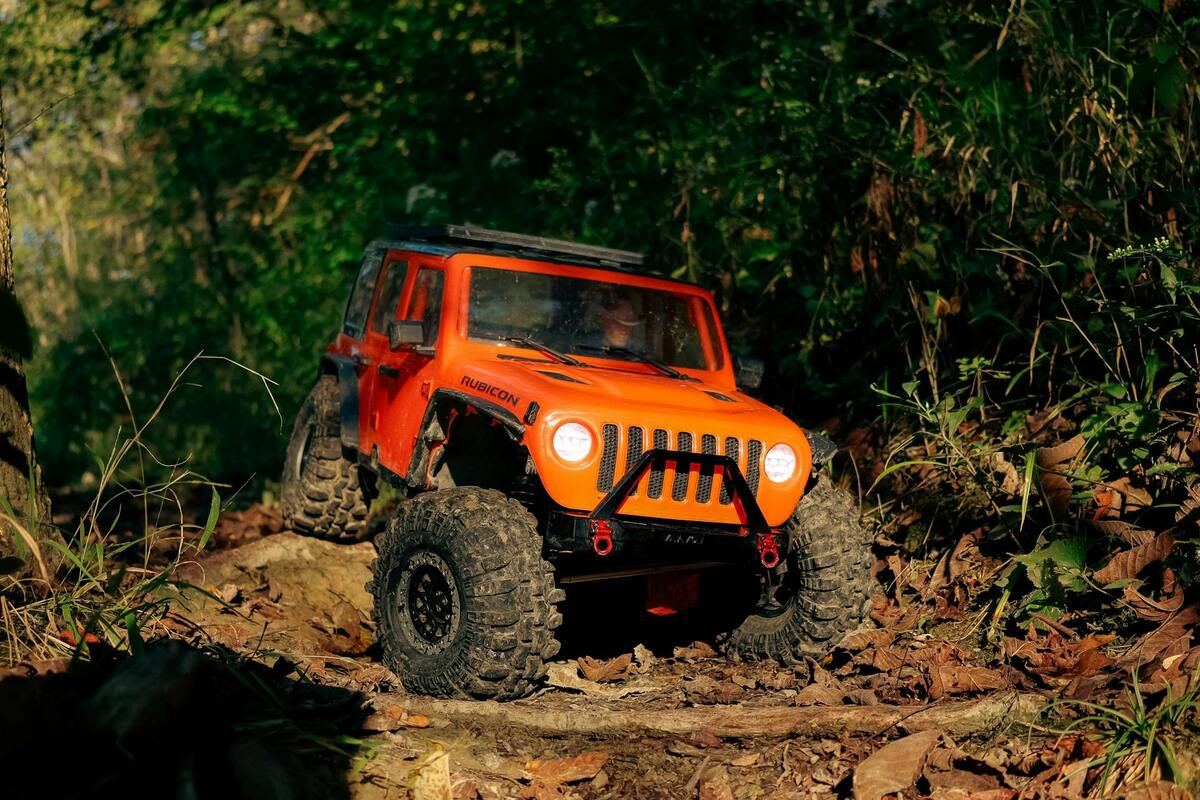
The SCX24 comes with a tiny brushed can motor. It crawls, it responds, and for most casual use it’s genuinely fine. I ran mine for months on stock power without feeling like the motor was limiting me.
Brushless is a late-stage upgrade, not an early one. If you haven’t done brass yet, the brushless conversion is not where your money should go. Read The Brushless Question first; it covers the honest case for waiting and will tell you whether this makes sense for your stage of the hobby.
If you’ve already done brass and servo and you’re finding the stock motor running hot or wanting finer low-speed control, this guide covers the rest.
What’s Actually Wrong With the Stock Motor
The SCX24 brushed motor has two real limitations for the driver who pushes the platform.
First, efficiency. Brushed motors convert more energy to heat than brushless motors at the same demand level. On long sessions or sustained technical crawling, the stock motor gets warm. Warm electronics on a micro platform are not ideal.
Second, low-speed resolution. Sensored brushless motors give you finer throttle control at near-zero speeds. In crawling, that’s the range you use most. The difference between barely moving and stalling on a steep face is a small amount of throttle input. Brushless handles that range better than brushed, with less cogging (the stuttery hesitation that happens when a sensorless motor can’t quite hold position at very low RPM).
The stock motor does not fail dramatically. It just runs out of capability in specific situations that more advanced crawling exposes.
Why the ESC Has to Change Too
This is the part that catches beginners.
You cannot run a brushless motor on the SCX24’s stock ESC. The stock unit is a brushed ESC: it sends DC power to the motor in a way that only works with brushed motors. A brushless motor needs three-phase AC-style pulses. Wrong ESC and the motor either does nothing or you damage the electronics.
Brushless conversion means replacing both the motor and the ESC at the same time.
On a TRX4M-sized chassis, you have enough room to source a motor and ESC separately. The SCX24 electronics bay is much smaller. Fitting an independent brushless ESC alongside a separate motor is a real space puzzle. Combo systems (motor and ESC designed and sold together) are the practical answer for the SCX24. The Furitek ecosystem builds combo systems specifically for micro-class crawlers where space is the binding constraint.
What to Look for
Can size. The SCX24 uses a very small motor. Standard RC brushless motors (the kind that fit a TRX4M or larger crawler) do not fit. You are looking for purpose-built micro brushless systems, not general-purpose brushless motors. This rules out most of the generic brushless options at RC shops and narrows the field to brands that specifically target micro-class vehicles.
Sensored vs. sensorless. A sensored brushless motor includes a sensor that tells the ESC (electronic speed controller) exactly where the motor’s rotor is at all times. This allows smooth, precise control at very low speeds with no cogging. A sensorless motor lacks this sensor and relies on back-EMF to estimate position. It works fine at higher speeds but can stutter or hesitate at near-zero throttle. For crawling, sensored is the right choice. You may pay more, but the low-speed smoothness is worth it.
Kv rating. Kv is a motor speed rating: the number of RPM the motor produces per volt with no load. Higher Kv = more speed, less torque per volt. For crawling, you want lower Kv. A crawling-spec brushless system will have a Kv rating suited to slow, controlled movement rather than flat-out speed. If you’re shopping a generic listing, check whether the manufacturer labels it for crawling or racing use.
Combo systems. For the SCX24, buying a matched motor-and-ESC combo from a single manufacturer is the sanity-preserving choice. The sizes are pre-matched, the connectors are pre-matched, and the tuning is pre-set for the platform. Some higher-end combos include Bluetooth app control for tuning throttle feel, drag brake, and startup mode. That’s a nice-to-have, not a requirement. If you want to tune the truck’s behavior from your phone, it’s a feature worth paying for.
Voltage. Most SCX24 brushless combos are rated for 2S, matching the stock battery setup, and that’s the sane default. If you’re eyeing this upgrade because you also want more speed from a 3S pack, replacing the motor and ESC is the mandatory first step either way, but stacking 3S on top adds cost and heat you may not need. Is 3S worth it on an SCX24? covers what the jump actually requires before you commit to it.
The Realistic Options
Furitek micro brushless systems are the dominant choice in the SCX24 brushless space, and for good reason. Furitek makes purpose-built micro crawling electronics with sensored motors and ESCs sized for the SCX24 chassis. Their higher-end combos include Bluetooth tuning via their app, which lets you dial in drag brake (a crawling-specific setting that controls how much the motor resists free-rolling when you lift off throttle), startup power, and throttle curve. The UNITY24 PRO line uses FOC (field-oriented control, a sensored control method that gives exceptionally smooth low-speed response).
If the Furitek price point is a stretch, the MicroSilk system is a more accessible entry point in the same ecosystem. Read the listing carefully before buying: confirm sensored operation and check for SCX24-specific fitment notes. Links to both in the shopping list below.
The honest truth on budget options: you may be fine, or you may find that a cheaper combo has less precise low-speed behavior, runs warmer, or requires more trimming to get the throttle feel right. If you’re buying brushless because you want a noticeable upgrade in feel, the budget end of the market can disappoint.
Heat, Gearing, and What Comes After
More power means more stress on the truck. The SCX24’s stock plastic drivetrain was designed around the brushed motor. Brushless pushes harder through that same plastic, and some drivers see drivetrain wear accelerate after the swap.
Two things to keep in mind: watch your pinion gear tooth count. Lower tooth count means more torque and less heat, which is what crawling calls for. Also consider Injora metal differential axle gears at the same time as the motor (link in the shopping list below). More power will find the weakest drivetrain link faster than the stock system ever did.
If you haven’t cleaned and inspected the truck in a while, do that first. Cleaning and maintenance covers the pre-conversion inspection.
Do Brass and Servo First
The brass upgrade should happen before brushless. Brass adds weight low in the right places, improving traction and stability more fundamentally than motor power. It’s also cheap and easy.
The servo upgrade should happen before brushless too. More power with a weak servo just means the truck goes where it wants instead of where you point it.
For the full priority order, the SCX24 upgrades guide lays it out. Brushless lands near the end, after the upgrades that change how the truck behaves in more fundamental ways.
What to Buy
Short list for the conversion:
- Primary combo: Furitek UNITY24 PRO 3500kv 2-in-1 Micro FOC Brushless System for SCX24 (sensored FOC, app-tunable, purpose-built for the platform)
- Entry-level Furitek option: Furitek MicroSilk Brushless Power System for SCX24 (same ecosystem, lower price point)
- Metal axle internals (optional, do at same time): Injora Metal Differential Axle Gears for SCX24
Tools you will need: a 1.5mm and 2mm hex driver (same ones from the servo swap), small Phillips screwdriver, and patience for the wire routing in a tight electronics bay. If you don’t have these yet, the essential tools guide covers the basics.
Summary:
- The stock brushed motor is adequate for casual crawling; brushless is a refinement for drivers who’ve hit its ceiling
- You must replace both motor and ESC; a brushless motor will not run on the stock brushed ESC
- The SCX24’s small electronics bay makes combo systems the practical choice over sourcing motor and ESC separately
- Sensored brushless is the right spec for crawling: smoother low-speed control, no cogging at near-zero throttle
- Furitek builds the most purpose-fit SCX24 micro brushless systems; budget combos exist but results vary
- More power stresses the plastic drivetrain; watch gearing and consider metal axle internals at the same time
- Do brass and servo first; brushless is a late-stage upgrade, not a starting point
See also: The Brushless Question · SCX24 Brass Upgrade · SCX24 Servo Upgrade · Best SCX24 Upgrades · First 5 Upgrades · Essential Tools · Cleaning and Maintenance · Is 3S Worth It on an SCX24 or TRX4M?
This page contains affiliate links. If you purchase through these links, I may earn a small commission at no additional cost to you. I only recommend gear I actually use.
Ready to buy?
See my curated gear picks for this platform and others — organized by upgrade priority.
Browse Recommended Gear →