Crawler Tires by Terrain: What Actually Works Where
Rock, dirt, carpet, and indoor courses all want different things from a tire. Here's how to match your rubber to your terrain without overthinking it.
Tires are one of those topics that can get surprisingly deep in the crawler world. There are whole communities dedicated to finding the perfect compound for a specific rock type in a specific region. That level of detail is genuinely fun once you’re deep in the hobby.
But when you’re starting out, the framework is simpler than the forums make it look. Terrain falls into a few categories, and once you understand what each type of terrain needs from a tire, you can make a solid decision without a spreadsheet.
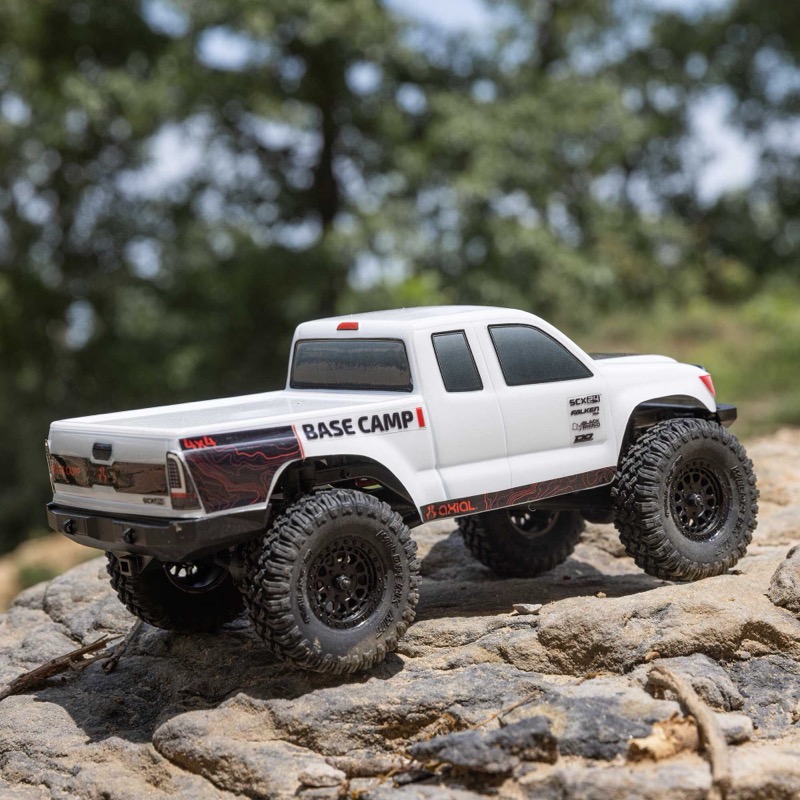
What Makes a Crawler Tire Work
Before getting into terrain types, it helps to understand the variables in play.
Tread pattern is the most obvious factor. Deep, aggressive lugs dig into loose terrain and grab rock edges. An open, spaced pattern lets mud and loose material clear out between contacts. A tighter tread gives you more surface area on hard, consistent surfaces.
Compound (hardness) matters too. Softer compounds conform better to irregular rock surfaces and generally give more grip in dry conditions. Harder compounds hold up better in abrasive terrain and last longer. Most crawler tire brands offer a soft and standard option — when in doubt, go soft for rock.
Foam inserts are the underrated variable. The foam inside the tire acts as both a sidewall support and a terrain-conforming cushion. Softer foam allows the tire to deform around rock features, which dramatically increases the contact area. Most aftermarket tires have better foam than stock, and cutting or replacing stock foam is one of the cheapest improvements you can make.
Rock and Trail Crawling
This is what most micro crawlers are built for, and it’s where tire selection makes the biggest difference in capability.
You want an aggressive tread with defined lugs that bite rock edges and maintain traction on sloped, uneven surfaces. The tire needs to be able to conform to the surface — which means both softer compound and softer foam are working in your favor here.
For the TRX4M: Pro-Line 1.0” tires are the community reference point. The Pro-Line Hyrax is widely used by trail crawlers and has a strong track record on East Tennessee-style terrain — flat rocks, roots, forest floor with natural obstacles. The BFGoodrich Mud Terrain variant is worth considering if your trails lean toward dirt and loose ground. Both fit the stock TRX4M wheels without modification.
For the SCX24: RC4WD makes 1.0” options that fit the SCX24 wheel size. The RC4WD Flashpoint is a consistent community pick for trail use. Injora also makes several aggressive tread options at very competitive prices.
For the SCX10: At 1/10 scale you have far more tire options. Pro-Line Hyrax 1.9” in a soft compound is an excellent trail tire. If you’re running the SCX10 III Gladiator on real terrain, a dedicated trail tire makes a meaningful difference over the stock setup.
On real outdoor rock, the tires that shipped with your RTR will limit you noticeably before anything else does. This is the one terrain type where upgrading tires should come first — or right after brass weight if you’re following the upgrade sequence.
Indoor and Carpet Courses
Indoor courses — rock stacks made of wood or foam, garage setups, kitchen counter obstacles — are a different challenge. The surface is consistent, the features are deliberately shaped, and grip comes from surface contact rather than tread bite.
On indoor surfaces, you generally want a tire with more contact area and less aggressive tread. Deep knobby tires can spin in place on carpet in a way that works against you. A tighter tread or a rounder profile performs better on consistent hard surfaces.
Compound matters more indoors. On smooth surfaces, a soft compound grips consistently and predictably. A harder compound gets slippery on carpet in a way that feels almost random.
The SCX24 really shines in this environment, and part of the reason is that the smaller footprint and lighter weight work with the surface rather than fighting it. If your SCX24 is primarily an indoor rig, prioritize softer compound over aggressive tread when picking replacement tires.
Dirt and Loose Terrain
Loose dirt, gravel, and garden-path terrain falls between rock and carpet — you need enough tread to push material out of the way and find something solid underneath, but overly deep lugs can pack with dirt and lose traction rather than gaining it.
An open, spaced lug pattern works well here. Tread that self-clears between contacts performs better than a design that traps material. The Axial Ripsaw and similar open-pattern tires have a following in this type of terrain.
Mud is its own category, and honestly it’s beyond what micro crawlers are really designed for. If you’re regularly running in wet, muddy conditions, a 1/10 scale rig with dedicated mud tires is the right tool. A micro crawler in actual mud gets clogged and loses traction quickly — the terrain wins.
The Simple Starting Point
If you’re unsure what to buy for your first tire upgrade, here’s the short version:
Primarily outdoor trail and rock: Go with an aggressive tread — Pro-Line Hyrax or comparable — in soft compound. This is the safest default and where the biggest capability improvement lives.
Primarily indoor courses: Choose tighter tread, soft compound, and focus on surface contact area over aggressive lug design.
Mixed use: Aggressive tread is the safer default. It underperforms on indoor carpet compared to a dedicated indoor tire, but it handles outdoor terrain in a way a low-profile tread simply can’t.
Tires are one of the most affordable experiments in this hobby. Pick a set, run them on your typical terrain, and let the trail tell you whether they’re right. You’ll develop specific preferences faster than you expect once you have real runs under them.
See also: Best SCX24 Upgrades Under $50 · Best TRX4M Upgrades · Your First 5 Crawler Upgrades · Cleaning Your Crawler After a Run · Best LiPo Batteries for Micro Crawlers · Recommended Gear
This page contains affiliate links. If you purchase through these links, I may earn a small commission at no additional cost to you. I only recommend gear I actually use.
Product images courtesy of Axial/Horizon Hobby and Traxxas.
Ready to buy?
See my curated gear picks for this platform and others — organized by upgrade priority.
Browse Recommended Gear →