RTR vs Kit: What Beginner RC Crawlers Actually Need to Know
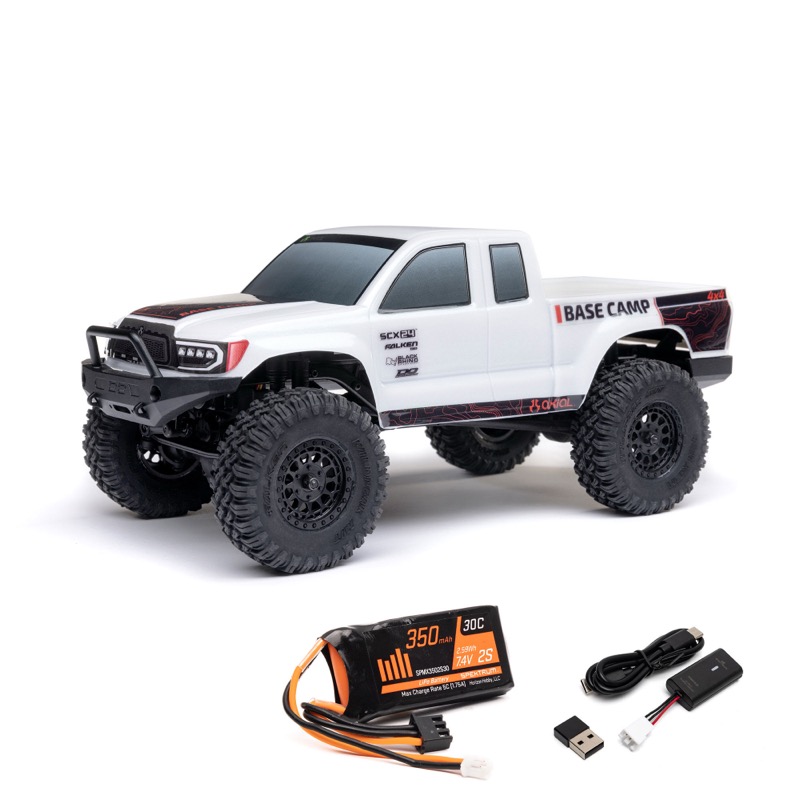
When you start researching your first RC crawler, you’re going to run into the RTR vs kit build question pretty quickly. Forum posts, YouTube videos, and hobby shop conversations will all have opinions. Some will make you feel like building from a kit is the “right” way to get into the hobby — the more authentic, more rewarding path.
Here’s my honest take after diving into this hobby on a real world budget: for most beginners, RTR is the right call. Let me explain why, and more importantly, let me explain the situations where a kit actually does make sense.
First, What Are We Actually Talking About?
RTR stands for Ready to Run, and it means exactly what it sounds like. Everything you need to get rolling comes in the box — the vehicle, motor, electronic speed controller, receiver, transmitter, and usually a battery and charger. You open the box, charge the battery, add AA batteries to the controller, and you’re on the trail. Simple.
A kit is a different animal entirely. You’re buying the mechanical components of the vehicle — the chassis, suspension, axles, and hardware — and assembling it yourself. Sounds straightforward, and in many ways it is. Most kits are genuinely a follow-the-directions-to-done process, and the satisfaction of running something you built yourself is real. But here’s the part that catches a lot of beginners off guard.
Most kits don’t include electronics.
No motor. No speed controller. No receiver. And critically, no radio transmitter. If you’re brand new to the hobby, that means on top of the kit price you’re also shopping for an entire electronics package before your rig ever turns a wheel. What looked like a cost-effective entry point suddenly has a lot of line items.
The Kit Math That Beginners Often Miss
This is where I want to be straightforward about my own experience — my research into kits was limited by my budget at the time, so I can’t speak to every kit on the market. But in my exploration of the options available to me, the electronics gap was consistent enough that it became a deciding factor.
For someone already established in the hobby, a kit can actually be a smart choice. If you already have a radio system you like, spare receivers sitting in a parts bin, and a charger that works with multiple battery types, then a kit lets you skip paying for things you already own. That’s genuine value. But that’s a very different situation than someone walking into the hobby for the first time with none of that infrastructure.
If you’re starting from zero, RTR is almost always the more economical and practical entry point.
The Hidden Costs of Kit Builds
Beyond electronics, there are a couple of other things worth factoring in that beginner guides often gloss over.
Tools. Kit assembly requires small hex drivers — specialized in size even if basic in concept. Most kits include basic tools, and technically you can get by with them. But your experience will be significantly better with a proper set of hex drivers that have comfortable handles and interchangeable bits. It’s not a massive investment, and honestly it’s something every RC hobbyist needs eventually regardless of how they get into the hobby. There are solid entry level sets that won’t break the bank, and if you subscribe to the buy once cry once philosophy there are higher quality options worth considering as well.
Paint. Many kits include a body, but that body is often unpainted — a clear polycarbonate shell waiting for you to bring it to life. If you have painting skills and the right supplies, this is actually a really fun part of the build process. If you’ve never painted an RC body before, it’s a skill worth researching before you factor it into your budget. Lexan specific paints, masking, and clear coat all add up both in cost and learning curve.
The Scale Factor
In the world of mini crawlers, kit wasn’t really an option for me. Budget was one of my main deciding factors, which took me out of the 1:10 market for getting started.
If you are in the budget range for 1:10 scale crawlers, then kits are certainly an option worth considering. But you need to keep in mind the difference in what you’re getting. An RTR is everything — motor, radio, usually a battery — all in the box ready to go. Most kits don’t include any electronics, so you would need to provide your own. Which, if you are already established in the hobby, might be a nice time and money saver since you likely already have a radio transmitter and possibly spare receivers. Or if you just need a receiver, you don’t have the cost of the radio to go with it. But again, this is in the 1:10 and larger world.
So When Does a Kit Actually Make Sense?
Kits aren’t the wrong choice — they’re just not necessarily the best first choice for most beginners. Once you’re established in the hobby, a kit build is genuinely rewarding. You understand the truck from the ground up because you assembled it. Troubleshooting becomes easier because you know exactly what’s in there and how it goes together. And if you already have a radio, receivers, and a charger sitting on your bench, a kit stops being expensive and starts being smart.
The right time for a kit is when you already know what you’re doing and you want a specific platform, a specific look, or a specific build experience. Not when you’re trying to figure out whether you even like crawling yet.
The Bottom Line
Start with RTR. Get on the trail. Learn what you like, what you want more of, and what you’d change if you could. That knowledge will make you a much better kit builder when the time comes — if it comes. Some people build kits eventually and love it. Others run RTR trucks for years and never feel like they’re missing out on anything.
Neither path is wrong. But only one of them gets you on the trail this weekend.
If you’ve already decided on RTR and you’re trying to pick between the two best micro crawlers right now, the SCX24 vs TRX4M breakdown will sort that out. And once you’ve got your rig, here’s exactly what to buy with it before your first run.
See also: SCX24 vs TRX4M: Which Should You Buy? · Everything You Need to Buy With Your First Crawler · Essential Tools for Your Bench · Recommended Gear Product images courtesy of Axial/Horizon Hobby and Traxxas.
Looking for specific gear?
Browse my curated picks organized by platform and category.
See Recommended Gear →