My First Trail Day Taught Me an Expensive Lesson for Free
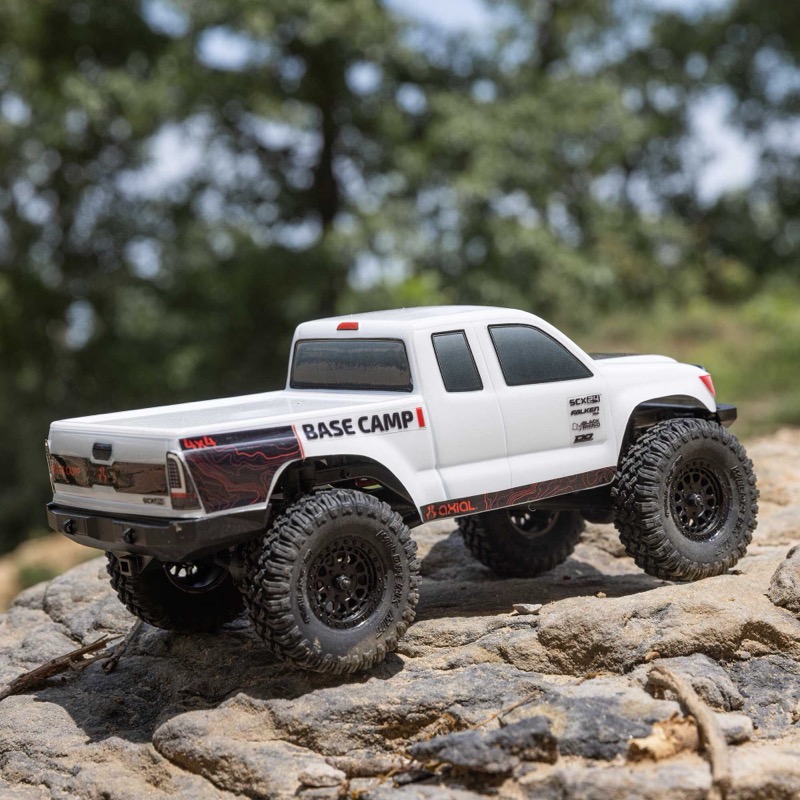
There’s a particular kind of optimism that comes with a freshly upgraded rig. You’ve done the work, you’ve done a quick drive around the shop, everything checks out. Now it’s time to actually go use the thing.
Last spring, my daughter and I loaded up and headed for the local hiking and mountain biking trails. Her rig had a fresh set of tires. Mine had new axles. It was exactly the kind of morning this hobby is supposed to produce.
We get there, find a good spot to set up, and I drop a battery in my truck. Everything boots up clean. Transmitter on, throttle response looks good, and then —
No steering.
All four wheels spinning — these things are four wheel drive, after all — but the front end wasn’t turning. Hard to crawl when you can’t steer.
My daughter, to her credit, had her truck running and was already eyeing the first obstacle. I was staring at my rig trying to figure out what I’d done to it.
The Troubleshoot
Here’s the thing about no steering — there aren’t many places to look. You’ve got the transmitter, the receiver, and the servo. That’s the whole chain. Everything had been working the night before, so this wasn’t a “sat in a bin for six months” situation. I had installed the new axles, driven it around, confirmed everything was working, and called it good.
I started with the servo. I’m running a RadioLink R4GM receiver, so I pulled the servo lead off Channel 1 and plugged it into Channel 2 — the throttle channel. Trigger the throttle, servo moves. Servo’s fine.
That only leaves one thing.
Receiver.
Sitting at home, right where I left it, was a spare receiver. I knew I had it. I had thought about throwing it in the bag. I had decided not to because — and this is the part that gets me — it was working just fine yesterday.
Lessons That Stick
The thing is, I didn’t do anything wrong mechanically. The install was solid. The bench test checked out. Electronics just fail sometimes, and they have a particular gift for choosing the worst possible moment to do it.
The lesson isn’t “always reinstall everything before a trail day.” It’s simpler than that: if you have a spare, bring it. It doesn’t need to live in your trail bag. It doesn’t need to be on your person. But it should at least make the trip to the parking lot. A spare receiver in the car costs you nothing. A dead receiver with no backup costs you a trail day.
How It Actually Ended
We went on the hike anyway.
My daughter ran her rig through the whole trail — up the rocks, through the mud, into situations where I genuinely wasn’t sure she was going to make it and she did. She’s a better crawler than she knows. And at some point she handed me the transmitter and let me have a go at a few of the obstacles she’d already scouted.
It wasn’t the day I planned. But watching her run that trail, and getting a few turns myself, it was still a good day. A day on the trail beats being stuck inside every time — even when your own truck is sitting in the bag.
Next time the spare receiver is coming with me. I’ll put it in the car tonight.
If you’re gonna send it, send it slow.
See also: Essential Tools for Your Bench and Trail Bag · Everything You Need to Buy With Your First Crawler · Recommended Gear
This page contains affiliate links. If you purchase through these links, I may earn a small commission at no additional cost to you. I only recommend gear I actually use.
Product images courtesy of Axial/Horizon Hobby and Traxxas.
Looking for specific gear?
Browse my curated picks organized by platform and category.
See Recommended Gear →